
A Proven, All Natural Pain Relief Solution.
At The Center for Well-Being in Colorado Springs, we offer Rolfing Structural Integration to help you move, feel, and live better — whether you're recovering from chronic pain, improving athletic performance, or simply seeking to feel more at home in your body.
Rolfing isn’t massage. It’s a powerful hands-on technique that works with the connective tissue (fascia) in your body to release long-held patterns of tension, improve posture, and restore natural alignment. This deeper structural work leads to lasting change — not just temporary relief.
Release the tension in your muscles to help realign and provide lasting stability to a body.

Rolfing is more than just structural bodywork — it’s a path to long-term physical, mental, and emotional well-being. Whether you're recovering from chronic pain, enhancing athletic performance, or seeking relief from day-to-day tension, Rolfing can support your goals in a meaningful way.
Rolfing is a powerful tool, and a very important tool for me to have for my patients. People who have suffered from chronic pain for 20 years will be amazed at how their pain goes away.
-Dr. Jacob Teitelbaum, Board-Certified Internist and Head of a Fibromyalgia Research Clinic in Annapolis, MD
Here are some of the most common and impactful benefits
Rolfing helps reestablish natural alignment by releasing fascial restrictions that pull your body out of balance. Many clients report standing taller and feeling more “at home” in their bodies — sometimes after just one session.
By addressing underlying structural issues, Rolfing can ease long-held discomfort in areas like the back, neck, shoulders, hips, and jaw — even when other therapies haven’t helped.
When fascia becomes tight, it limits movement. Rolfing restores mobility by gently freeing up these restrictions, allowing for more natural, efficient movement without forcing the body.
Athletes use Rolfing to improve form, prevent overuse injuries, and speed recovery by balancing muscle groups and improving movement patterns.
Because fascia stores physical and emotional memory, working through body tension often leads to mental clarity and emotional release — fostering a deeper sense of ease and presence.
Rolfing pairs well with physical therapy, chiropractic, and acupuncture as part of a holistic plan. It’s especially helpful after surgery, injury, or repetitive strain.
By opening the rib cage and improving diaphragm function, Rolfing can help you breathe more deeply and fully — a benefit that ripples into stress relief and overall energy levels.
View Rolfing Endorsements from Athletes and Medical Professionals
Rolfing Structural Integration is a hands-on therapy that focuses on realigning the body by working with the fascia — the connective tissue that wraps around muscles, organs, and bones. When fascia becomes tight or imbalanced due to injury, stress, or posture habits, it can pull the body out of alignment, leading to discomfort and restricted movement.
Unlike massage therapy, which typically focuses on relaxation or muscle tension, Rolfing works to create long-term structural change. It helps the body move more efficiently and naturally, improving posture, relieving chronic pain, and enhancing the way you experience your body.
Rolfing is often chosen by:
-
People with chronic or postural pain
-
Athletes seeking improved performance and faster recovery
-
Those recovering from injury or surgery
-
People experiencing emotional tension or trauma held in the body
-
Anyone looking for a deeper connection to their physical self
Read Dick's article, The Role of Connective Tissue as the Physical Medium for the Conduction of Healing Energy in Acupuncture and Rolfing®
The method was developed by Dr. Ida Rolf, a biochemist who believed that when the body is properly aligned in gravity, it functions better — physically, emotionally, and energetically. Her approach became known as Structural Integration, and Certified Rolfers are trained in a comprehensive system that addresses the entire body, not just isolated symptoms.
At The Center for Well-Being, we approach Rolfing with a blend of anatomical precision and compassionate care. Sessions are designed to help you move better, feel lighter, and discover what your body feels like when it's truly in balance.
Rolfing is a whole-body system of health care originated by and named for Dr. Ida P. Rolf, Ph.D. Dr. Rolf called her work "Structural Integration", because it focuses on the structure of the body, releasing the body from lifelong patterns of tension, to change posture and alignment.
Rolfing became more widely known after Dr. Rolf helped a young boy, named Tim Law, in 1959. Tim was diagnosed by doctors as suffering from Legg-Perthes disease: doctors were certain that by the time he was 20, he would be confined to life in a wheelchair.
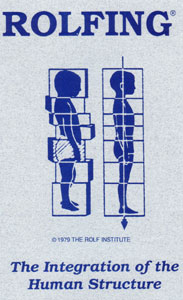
The Dr. Ida Rolf Institute’s “little-boy” logo is based on the actual before and after of a four-year old boy named Tim Law.
The doctors only recommendation was to put Tim into a cast - for 5 years - to help rectify his condition. After much consideration, Tim's mother made a difficult, yet courageous, decision to have Dr. Rolf work with her son.
The last 46 years have borne out the correctness of her decision: Tim went on to be a champion surfer in high school and college, father two children, and live a happy and fulfilling life until his passing in 2017.
Dr. Rolf's discovery was that if specific kinds of pressure were applied to fascia, the body shape will change in a lasting way. The body is changeable, a plastic medium.
To illustrate the possible consequences of the body’s changeability, consider a twisted ankle. The connective tissue in the affected ankle area will shorten and thicken (for support) causing a temporary limp. This shifting of weight to the other leg restructures the muscles in the legs, pelvis, spine, and eventually throughout the body.
Although the limp disappears after a few weeks, the overall pattern in the muscles and tissues continues. As time goes by, the pelvis continues to tilt, the lower back becomes painful, and tensions and pains appear in the body without any obvious reason. The person is left with an ever-increasing distortion.
Serving Colorado Springs and Beyond
We’re proud to serve clients from across the Rocky Mountain region. Whether you’re new to bodywork or returning after a break, Rolfing can support your next step in wellness.
If you're curious about how Rolfing could support your body, we offer a free 30-minute consultation to answer questions and explore whether it’s a good fit.
Or call Dick at (719) 937-7722 to schedule your first session.